
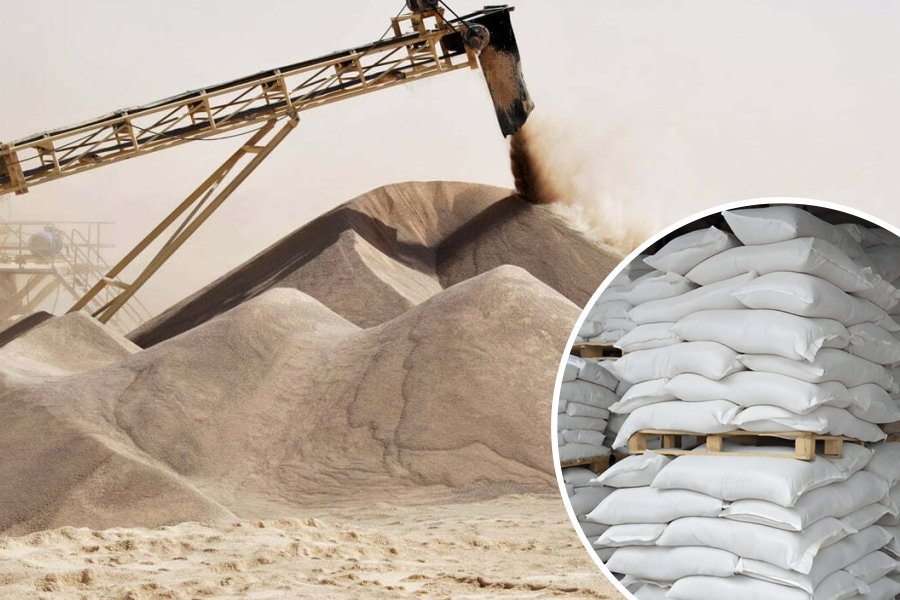
What is Rock Phosphate? Driving Agriculture & Manufacturing Sourcing
Unlocking the Power of Rock Phosphate: The Foundation of Global Agriculture and Industry
In modern international commerce and industrial manufacturing, some raw materials have significantly more impact than it is immediately visible. These inputs are the ones without which it would be impossible to create food supplies and industrial goods fit for sustaining millions of people at a global level. It means that their absence or any disruption to their production and supply chains could cause serious economic and political issues.
At the very top of that list sits Rock Phosphate.
Rock phosphate is one of the most common natural sources of phosphorus which is a nutrient necessary for the plant’s growth. Together with nitrogen, potassium, and other elements, phosphorus is part of the fertilizer known as N-P-K. However, rock phosphate has other uses aside from fertilizers. It is a very important mineral for various industries, chemical manufacturers, and other business entities which rely on a constant supply of high-quality resources.
What Exactly is Rock Phosphate?
Rock phosphate, also known as phosphate rock is not a singular substance. In fact, the expression generally refers to various types of sedimentary and igneous rocks with significant concentrations of phosphate minerals, primarily from the apatite group.
While purchasing rock phosphate in bulk, one of the first parameters that procurement managers analyze is its $P_2O_5$ (Phosphorus Pentoxide) content. The proportion of this element is an important indicator of the rock’s quality and grade. It also determines its reactivity and commercial applicability.
The Strategic Driving Force: Core Industrial Uses
While phosphorus is used in a variety of end applications from steel production to food additives, the global market is dominated by just two colossal industries:
1. The Backbone of the Fertilizer Industry
About 90% of the world’s mined rock phosphate is turned into chemical fertilizers. As the raw phosphate rock is largely inert, it must be processed at fertilizer plants to create a water-soluble form that plants can actually absorb. The fertilizer industry produces several types of phosphate fertilizers, including:
Single Superphosphate (SSP) & Triple Superphosphate (TSP): Manufactured by treatment of the rock with sulfuric or phosphoric acid to produce a material with substantially higher content of available water-soluble phosphorus.
Diammonium Phosphate (DAP) & Monoammonium Phosphate (MAP):
High-analysis fertilizers that are critical for the global production of broad-acre crops.
2. Phosphoric Acid Production:
Industrial-grade rock phosphate is imported in large quantities for the industrial “wet process” production of phosphoric acid. This versatile acid is used as an intermediate in the production of detergent builders, metal treatments, anti-corrosion agents, and specialized animal feed supplements.
What Procurement Teams Must Look for When Sourcing
Not all rock phosphate types are the same, and it is critical to choose the right quality to avoid underperformance, excessive sludge in your processing tanks, and bad end-products. When reviewing a Certificate of Analysis, the most important things to focus on are:
The $P_2O_5$ Threshold
High-Grade ($>30\%\ P_2O_5$): High-Grade ($>30\%\ P_2O_5$): Mostly used in complex acidulation plants, and for the production of high-analysis fertilizers. Medium-Grade ($26\%\ \text{to}\ 30\%\ P_2O_5$): The most versatile type, suitable for blending and the production of Single Superphosphate.
Impurity Ratios
Higher-than-needed levels of iron ($Fe_2O_3$), aluminum ($Al_2O_3$), and silica ($SiO_2$) will make the chemical reaction during production more challenging. A reliable trading partner will ensure that the ratio of Minor Elements, or MER is within the MER tolerance of your processing plant, to allow for uninterrupted production.
The Sourcing Landscape: Importing Into Thriving Industrial Hubs
If you are sourcing into a developing industrial center such as Indonesia, you will want to secure a steady supply of rock phosphate to meet the rising demand. Industrial centers have a high need in rock phosphate, and you have to consider the intricacies of the delivery chain.
Since rock phosphate is a bulky commodity that is transported in large volumes,
special care has to be taken to ensure consistent quality of the delivered product.
Moisture Control: Keeping the contents dry during the cross-ocean transit to avoid clumping.
Particle Size Consistency: The mesh size or Run-of-Mine (ROM) structure must have been met per the processing factory’s request.
Strict Quality Inspections: Using third-party verifiers like SGS or Sucofindo at the loading port to ensure that the $P_2O_5$ content meets the contract specifications to a tee.
Securing Your Bulk Supply Chain
Within the B2B chemical space, the easiest way to acquire the cheapest price per tone is to invite the highest degree of supply risk on your production lines. To that end, your company needs a competent trade partner who can manage international logistics, customs inspections, and quality control audits on a high level.
PT Prime Global Trading recognizes its role as an intermediary between the world’s mine sites and industrial manufacturers. That said, we respect the customer’s need to have the guaranteed supply of the minerals they need for continuous production.
Ready to Optimize Your Raw Material Sourcing?
Whether you need to scale your fertilizer processing plant or have a steady supply of chemical intermediates, the international desk at PT Prime Global Trading is a reliable partner. So, reach out today to get a commercial offer, analyze the specifications of the sample lot, or request a quotation.
Next
What is Xanthan Gum? The Ultimate Food & Industrial Stabilizer Guide